← Home · Investigation

Exploratory Test Pit Investigations Across Kelowna's Varied Terrain

Together, we solve the challenges of tomorrow.

DETAILS →

We see it too often in Kelowna: a contractor breaks ground in the Mission area assuming uniform till, only to hit a pocket of saturated silts that turns a straightforward excavation into a dewatering mess. An exploratory test pit program eliminates that surprise. By exposing the stratigraphy directly—from the sandy loams near Okanagan Lake to the dense clay-rich tills up toward Black Mountain—we give you a visual record no borehole log can match. Our field crews log each pit following ASTM D2488, recording moisture, consistency, and structure. When the profile is complex, combining findings with grain-size analysis refines the classification, and a triaxial test on an undisturbed block sample provides the strength parameters needed for final design.

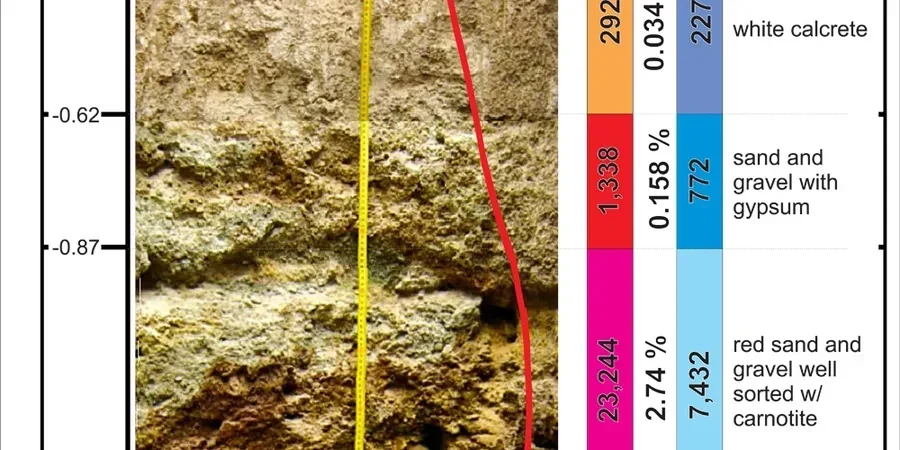
Direct observation in a test pit reveals fabric, jointing, and seepage that no remote sensing method can capture.

Method and coverage

The difference between a test pit on the west side along Boucherie Road versus one in the Rutland benchlands is striking. Near the lake, you might encounter interbedded silts and fine sands that require careful benching and immediate logging before they dry out. Up on the benches, the glacial till is often overconsolidated, and a pit wall will stand near-vertical for hours—an advantage for sampling but a challenge for digging. A standard exploratory test pit in Kelowna reaches 3 to 4 meters, though we go deeper with shoring when a project demands it. We photograph every face, sketch the profile to scale, and collect bulk samples for atterberg-limits testing, which helps confirm the expansive potential of the local clays. The goal is a clear, defensible ground model that puts the geotechnical engineer in control before the first footing is poured.
Exploratory Test Pit Investigations Across Kelowna's Varied Terrain
Technical reference image — Kelowna

Regional considerations

Kelowna sits at approximately 344 meters elevation along a deep glacial trough, and the 2021 flood events reminded everyone how quickly subsurface water moves through the valley’s stratified deposits. An exploratory test pit uncovers lenses of permeable sand that can destabilize an excavation wall or create a preferential flow path beneath a foundation. If you skip this step and rely solely on sparse drilling data, you risk mischaracterizing the groundwater regime. In a city where frost penetrates up to 1.2 meters in exposed areas, a test pit also lets us verify the depth and condition of the native material against NBCC frost protection requirements. A collapse during construction is far more expensive than a day of methodical pit logging.

Need a geotechnical assessment?

Reply within 24h.

Email: contact@geotechnicalengineering.xyz

Technical parameters


ParameterTypical value
Typical investigation depth3.0 - 4.5 m (deeper with shoring)
Standard logging protocolASTM D2488 / D420
Soil classification systemUnified Soil Classification System (USCS)
Sample types recoveredBag samples and undisturbed block samples
Groundwater observationSeepage rate, stabilized level after 24 h
Typical pit volume2.5 - 15 cubic meters
Minimum pit plan dimension1.2 x 1.2 m for personnel entry

Complementary services

01

Machine-Excavated Test Pit Investigation

A tracked excavator opens the pit while our geotechnical specialist logs the exposed profile, measures in-situ density with a nuclear gauge, and collects representative samples. We map stratigraphic contacts, note seepage zones, and provide a detailed report with cross-sections keyed to your site plan.

02

Combined Test Pit and Permeability Assessment

In cases where a pit intersects the water table, we install a temporary piezometer and conduct a falling-head test to estimate hydraulic conductivity. This data is critical for dewatering design and for complying with City of Kelowna infiltration requirements.

Standards that apply


ASTM D2488-17e1, ASTM D420-18, NBCC 2020 Division B, Part 9, CSA Z662 (pipeline trenching, when applicable)

Common questions

What is the typical cost range for an exploratory test pit in Kelowna?

Depending on depth, access, and lab testing needs, exploratory test pit investigations in Kelowna generally range from $640 to $1,100 per pit. This includes equipment, operator, geotechnical logging, photography, and a factual report.

How deep can an exploratory test pit go in the Okanagan till?

In the dense, overconsolidated till common across Kelowna, we routinely reach 4.5 meters without shoring, provided the pit is benched. Beyond that depth, or when loose water-bearing sands are present, we use a trench box or switch to a drill-based investigation for safety.

What happens if you encounter groundwater during excavation?

We stop the pit at the seepage horizon, measure the inflow rate, and let the water stabilize. If the project requires a deeper profile, we recommend following up with CPT soundings so you still obtain continuous stratigraphic data without sending personnel into a flooded excavation.

Can test pit samples be used for Proctor or CBR testing?

Absolutely. We collect 25 kg bulk bags specifically for Proctor compaction testing and CBR evaluation. The test pit method gives us enough material volume that one pit can supply all the earthworks testing a project needs—unlike a thin-wall tube sample from a borehole.
Location and service area

We serve projects across Kelowna and its metropolitan area.

View larger map