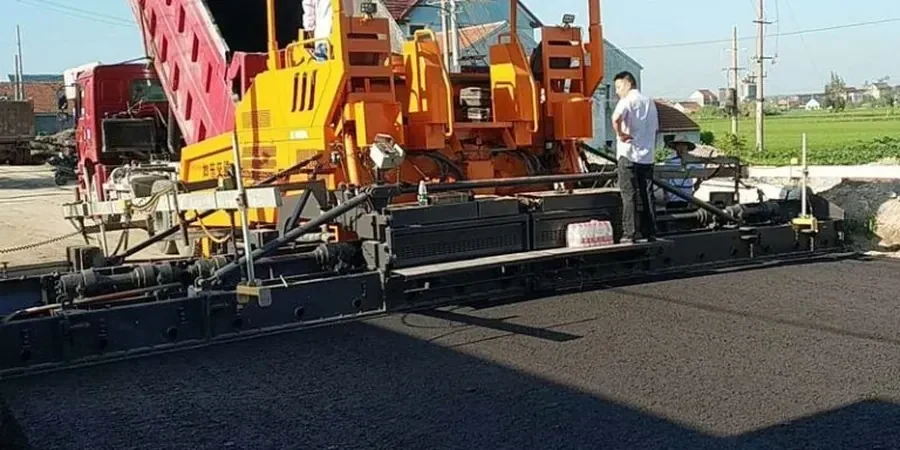
A recent commercial development off Highway 97 near the airport ran into a familiar Kelowna problem: six inches of asphalt over what looked like decent gravel started showing alligator cracking within eighteen months. The issue traced back to saturated silt lenses left over from glacial Lake Penticton deposits, materials that lose nearly all bearing capacity when wet. Designing a flexible pavement structure in the Okanagan Valley demands more than a standard catalogue cross-section; it requires layer-specific modulus inputs calibrated to local subgrades and realistic moisture conditions throughout the year. We approach each project with a forensic mindset, combining in-situ permeability testing of the subgrade with laboratory resilient modulus determination to build a pavement model that survives Kelowna’s 380 mm of annual precipitation concentrated in winter and spring, plus the dramatic swing from minus 20 °C to plus 40 °C ambient temperatures. The outcome is a pavement structure where each lift of asphalt, base, and subbase works as a system, not as three disconnected layers fighting each other under traffic loading.
A pavement section that works in summer can fail in March: we design for the saturated subgrade condition, not the dry one.
Regional considerations
Kelowna’s semi-arid climate creates a deceptive risk profile: surface soils can appear firm and dusty from May through September, leading designers to assume subgrade strengths that vanish during the November-to-March wet period. The real hazard lies in the glacial lake bottom silts that blanket much of the valley floor; these materials classify as ML or CL-ML under the Unified system, exhibit collapse potential upon wetting, and can lose sixty percent of their California Bearing Ratio when saturation exceeds eighty-five percent. We have measured in-situ CBR values below three percent in March at sites that tested above eight percent the previous August. Freeze-thaw cycling compounds the problem: ice lenses form in the upper subgrade during cold snaps, thaw during chinook events or spring warm-up, and leave behind a weakened zone with substantially reduced modulus. A pavement designed without accounting for this seasonal strength cycle will rut and crack prematurely, especially in the wheel paths of loaded delivery trucks serving the growing warehouse district along Sexsmith Road. Our designs incorporate a minimum granular separation layer thickness calculated to protect the subgrade during its weakest seasonal condition, not its strongest.
Common questions
What does flexible pavement design cost for a typical commercial parking lot in Kelowna?
For a standard commercial parking lot of 20,000 to 40,000 square feet, the combined subgrade investigation and pavement structural design package ranges from CA$2,540 to CA$6,770, depending on the number of DCP test locations, laboratory CBR specimens required, and whether seasonal groundwater monitoring is needed. Projects with variable subgrade conditions across the site fall toward the upper end of that range.
How do Kelowna’s glacial lake silts affect the pavement design thickness?
Glacial lake silts in the valley bottom exhibit high sensitivity to moisture: a subgrade that supports a CBR of 8 to 10 in August may drop to 3 or below after sustained winter saturation. This seasonal weakening forces a thicker granular base layer than would be required for a stable subgrade, typically adding 150 to 250 mm of additional aggregate when compared to design on compacted till. We model the pavement using the saturated modulus value, not the summer dry-weather value, which is conservative but essential for long-term performance.
What design period and traffic loading do you assume for Kelowna municipal roads?
We follow the BC MoTI Pavement Design Manual and typically design municipal arterial and collector roads for a 20-year analysis period with traffic projections expressed in equivalent single axle loads. For a typical collector road in a growing Kelowna neighborhood like Upper Mission or Black Mountain, this often falls in the 2 to 5 million ESAL range, though we work with the project traffic engineer to confirm site-specific projections. Higher-volume corridors such as Harvey Avenue segments require substantially higher design ESALs and correspondingly thicker pavement sections.