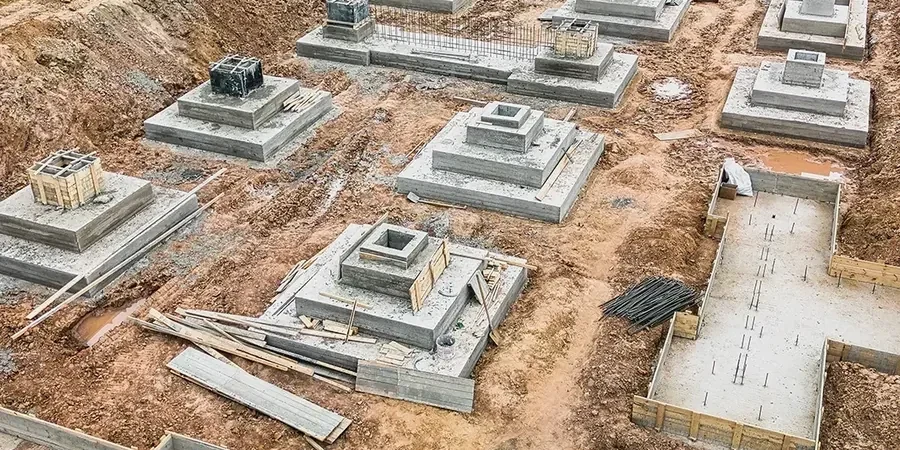
Foundations form the critical interface between any structure and the ground beneath it, transferring loads safely while accommodating the unique geotechnical conditions present in Kelowna. The Okanagan Valley presents a complex geological setting where foundation performance directly influences building longevity, safety, and value. From single-family homes in the Upper Mission to multi-storey commercial developments downtown, proper foundation engineering prevents differential settlement, heave, and moisture-related distress that can compromise entire structures. In Kelowna's variable terrain, foundation design must account for sloping sites, expansive soils, and proximity to Okanagan Lake, making site-specific geotechnical investigation essential before any construction begins.
Kelowna's geology is dominated by glacial lacustrine deposits, silts, clays, and sandy till overlying bedrock at varying depths. Much of the city sits on former glacial Lake Penticton sediments, which include compressible silts and clay layers that can consolidate under load. Hillside areas, particularly in Dilworth Mountain, Upper Mission, and Wilden, feature colluvium and weathered bedrock near surface, often with shallow groundwater conditions. Expansive clay soils are present in several Kelowna neighbourhoods, posing risks of seasonal heave and shrinkage that require careful foundation detailing. Additionally, areas adjacent to Okanagan Lake and its tributary creeks experience high water tables that demand robust waterproofing and sometimes deep foundation solutions. Understanding these local soil behaviours is fundamental to selecting appropriate foundation types.
Foundation design in Kelowna must comply with the British Columbia Building Code, which references the National Building Code of Canada and CSA standards. Geotechnical investigations follow the Canadian Foundation Engineering Manual guidelines, while seismic design adheres to BCBC requirements specific to the Okanagan's seismic hazard zone. For deep foundations, pile foundation design must meet CSA A23.3 for concrete and CAN/CSA-S16 for steel, often driven by site-specific seismic site class determinations. Municipal requirements from the City of Kelowna include specific foundation depth minimums, frost protection to 1.2 metres below grade, and drainage provisions that align with the city's Stormwater Management Bylaw. Engineers must also consider BC Housing performance guides for residential foundations in expansive soils.
A wide range of projects in Kelowna demand engineered foundation solutions. Residential construction on sloping lots typically requires stepped footings, retaining walls integrated with foundations, or deep pile foundation design to reach competent bearing strata. Multi-family and commercial projects in areas like the Pandosy corridor or downtown core often involve excavations near property lines, demanding shoring and underpinning designs that protect adjacent structures. Infrastructure projects, including bridges, water reservoirs, and retaining walls along lakeshore developments, require foundations that resist lateral earth pressures and fluctuating water levels. Even lightly loaded structures like agricultural buildings in East Kelowna benefit from geotechnical evaluation to avoid distress in compressible organic soils.
The City of Kelowna requires foundations to extend at least 1.2 metres below finished grade for frost protection, consistent with the British Columbia Building Code. This depth ensures footing bases are below the zone of seasonal frost penetration, preventing frost heave that could lift and crack foundations. Deeper requirements may apply in exposed or high-elevation areas where frost penetration exceeds typical Okanagan Valley conditions.
Expansive clay soils present in parts of Kelowna undergo volume changes with moisture fluctuations, exerting uplift and lateral pressures on foundations. Mitigation strategies include deepened footings below the active zone, void forms beneath grade beams, moisture control through proper drainage, and sometimes structural floor slabs. Geotechnical testing for Atterberg limits and swell potential is essential to identify expansive soil risks before finalising foundation designs.
Deep foundations become necessary when competent bearing soils are too deep for conventional footings, such as in areas with thick compressible silts, organic deposits, or fill. Hillside sites with steep slopes or shallow bedrock may also require piles or caissons to achieve adequate bearing and resist lateral loads. Projects with high structural loads, like multi-storey buildings, or sites with high water tables near Okanagan Lake often demand deep foundation solutions.
A thorough geotechnical investigation typically includes test pits, boreholes, or cone penetration testing to characterise subsurface soil and groundwater conditions. Laboratory testing determines soil strength, compressibility, and expansive potential. The resulting report provides bearing capacities, settlement estimates, seismic site class, and foundation recommendations. The City of Kelowna often requires this documentation for building permit applications, especially for complex sites or engineered foundations.
We serve projects across Kelowna and surrounding areas. More info.