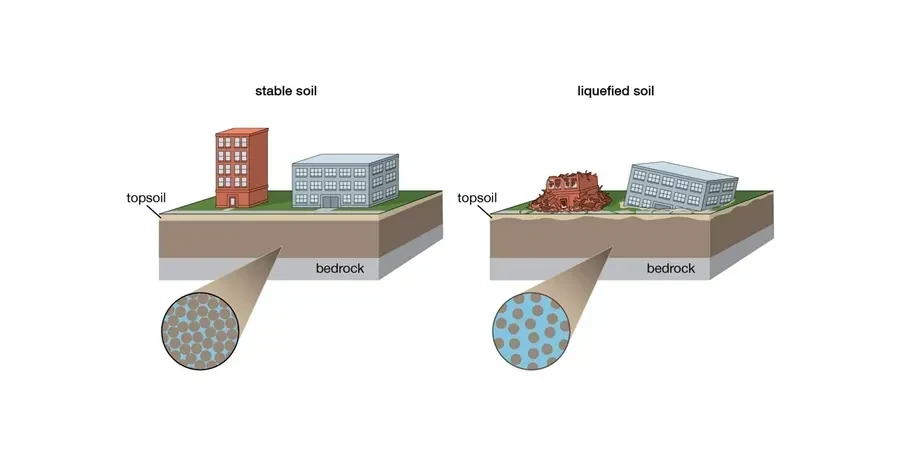
Seismic engineering in Kelowna encompasses a comprehensive suite of geotechnical and structural services designed to assess, mitigate, and manage earthquake risk in the built environment. Situated within the seismically active Cordillera region of British Columbia, the city faces a moderate yet tangible hazard from crustal and deep intraslab earthquakes originating along the Cascadia Subduction Zone and local fault systems. This category addresses everything from site-specific ground response and soil liquefaction analysis to advanced structural protection measures, forming the backbone of resilient urban development. For engineers, developers, and municipal planners, integrating seismic considerations early in the project lifecycle is not merely a regulatory checkbox but a fundamental obligation to protect life, infrastructure, and long-term investment.
The local geology of the Okanagan Valley introduces unique challenges that amplify seismic demands. Much of Kelowna's urban core and expanding suburban fringes are underlain by glacio-lacustrine silts, sands, and gravels deposited during the retreat of Pleistocene ice sheets. These unconsolidated sediments, particularly where the water table rests near the surface, are highly susceptible to phenomena such as cyclic softening and flow liquefaction during strong shaking. Furthermore, the valley's basin geometry can trap and amplify seismic waves, leading to site-specific resonance effects that are carefully evaluated through seismic microzonation studies. Understanding this subsurface variability is critical, as a uniform building code assumption cannot capture the stark contrast between a stiff bedrock outcrop on Dilworth Mountain and the deep soft soils near the lakefront.
Canadian seismic design is governed nationally by the National Building Code of Canada, which in its 2020 edition references dynamic site-specific parameters derived from the Geological Survey of Canada's seismic hazard model. British Columbia's Building Code adopts these provisions with provincial amendments, mandating that critical facilities, post-disaster structures, and high-occupancy buildings undergo rigorous geotechnical investigation. For Kelowna, this means projects must account for spectral acceleration values that reflect the regional seismotectonic setting, and in many cases, a site-specific response analysis is required to refine the foundation design. The norm also increasingly recognizes the value of performance-based design, where base isolation seismic design and energy dissipation systems can be employed to exceed minimum code requirements and achieve operational continuity after a major event.
The types of projects that demand these specialized services span the full spectrum of construction. High-rise residential towers and commercial complexes in the downtown core require deep foundation systems analyzed for kinematic soil-structure interaction under seismic loading. Essential infrastructure such as the Kelowna General Hospital expansion, emergency response centers, and long-span bridges crossing Okanagan Lake must remain functional post-earthquake, driving the need for advanced isolation or supplemental damping. Even smaller-scale developments on marginal soils, including tilt-up warehouses and multi-family wood-frame buildings, benefit from liquefaction screening and ground improvement design to prevent differential settlement and loss of bearing capacity. In essence, any structure where life safety or significant capital is at stake falls under the purview of this category.
A standard geotechnical investigation primarily addresses static bearing capacity and settlement under gravity loads, whereas a seismic hazard assessment explicitly evaluates dynamic ground motions, fault rupture potential, and site-specific amplification effects. In Kelowna's complex glacio-lacustrine soils, this includes quantifying cyclic degradation, liquefaction susceptibility, and lateral spreading displacement, which are not captured by routine borehole logging alone.
The NBCC classifies sites based on the average shear wave velocity in the upper 30 meters, ranging from hard rock to soft clay. This site class directly scales the design spectral accelerations, potentially increasing seismic demands by over 100% on soft soil versus rock. Misclassification can lead to unconservative designs, making a site-specific shear wave measurement essential for optimizing foundation costs and ensuring code compliance.
A site-specific analysis is mandated for structures on Site Class E or F soils, for post-disaster buildings, and for high-rises where base shear exceeds code minimums. In Kelowna, the deep lacustrine deposits near the lake often trigger this requirement. The analysis models the propagation of earthquake waves through the soil column, capturing nonlinear behavior and resonance effects that generic code spectra cannot represent.
Performance-based design explicitly defines acceptable damage states for different earthquake return periods, such as immediate occupancy after a 475-year event. Unlike prescriptive codes that focus narrowly on life safety, this approach uses nonlinear analysis to quantify drift, floor acceleration, and component damage. It is frequently employed for essential facilities in Kelowna where post-earthquake functionality is a critical operational requirement.
We serve projects across Kelowna and surrounding areas. More info.