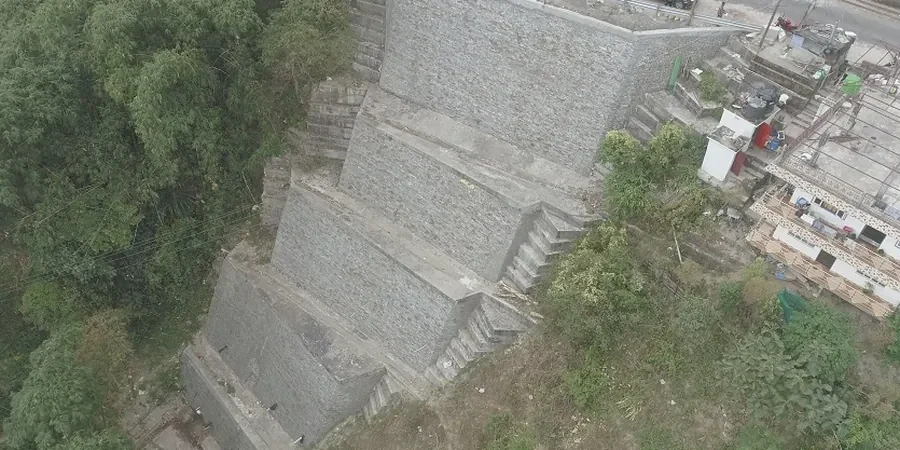
In Kelowna's dynamic terrain, where steep valley slopes meet the shores of Okanagan Lake, the stability of natural and engineered earth structures is a fundamental concern for property owners, developers, and infrastructure managers. The Slopes & Walls category encompasses the specialized geotechnical services required to assess, design, and stabilize both natural slopes and constructed retaining structures. This includes comprehensive slope stability analysis to evaluate failure risks, the engineering of restraint systems using active and passive anchors, and the structural design of walls that safely retain soil and rock masses. Without these integrated services, landslides, erosion, and structural failures would pose unacceptable risks to public safety and private investment throughout the Central Okanagan.
The regional geology presents unique challenges that demand rigorous local expertise. Kelowna is underlain by a complex stratigraphy of glacial till, lacustrine silts and clays deposited by ancient Lake Penticton, and bedrock formations of gneiss and schist. Many residential and commercial developments sit on or above these sensitive clay-rich soils, which can lose significant strength when saturated during spring freshet or heavy rainfall events. The steep escarpments along Dilworth Mountain, Knox Mountain, and the benches above the lake are particularly susceptible to retrogressive landslides and shallow slumping. Effective solutions must account for these soil conditions, groundwater regimes, and the interface between fill materials and native deposits, making thorough geotechnical investigation the essential first step in any slope or wall project.
Regulatory compliance in British Columbia is governed by a framework of national and provincial standards that directly shape how Slopes & Walls projects are executed in Kelowna. The BC Building Code references the National Building Code of Canada and requires that excavations, retaining structures, and slopes be designed to limit damage to adjacent properties and public rights-of-way. Engineers practicing in the province must adhere to the Professional Governance Act and the standards set by Engineers and Geoscientists BC, including their guidelines for landslide assessments. The CSA A23.3 standard for concrete structures and CHBDC provisions for mechanically stabilized earth walls are commonly applied, while municipal bylaws often require geotechnical peer review for developments on slopes exceeding 30%. These requirements ensure that designs for retaining wall design and slope stabilization meet minimum safety factors against bearing capacity failure, overturning, and global instability.
The range of projects requiring these services spans from private residential lots to major public infrastructure. Homeowners constructing terraced landscapes or basement excavations on sloping properties routinely need engineered retaining walls that respect property lines and drainage easements. Large-scale residential subdivisions on the city's expanding outskirts require stabilization of cut-and-fill slopes that will perform reliably for decades. Commercial developments along Highway 97 often involve tall, reinforced concrete cantilever walls to maximize flat building pads. Active/passive anchor design becomes critical for stabilizing deep excavations in urban areas, securing rock faces above transportation corridors, and providing permanent tieback support for walls exceeding conventional height limits. In each case, the service integrates with broader civil works and environmental management plans to deliver safe, durable, and permit-ready solutions.
Common indicators include new or widening cracks in soil or pavement, tilting trees or fence posts, bulging at the base of a slope, and unexpected seepage or saturated ground. For retaining walls, look for horizontal cracking, outward leaning, or soil erosion at weep holes. In Kelowna's clay-rich soils, seasonal moisture changes can accelerate these signs, so professional assessment is recommended as soon as they appear to prevent sudden failure.
The glaciolacustrine silts and clays common in Kelowna are highly moisture-sensitive, losing shear strength when wet and shrinking when dry. This creates cyclic movement and progressive weakening. Retaining walls must be designed with adequate drainage to prevent hydrostatic pressure buildup, and slopes often require surface water management to reduce infiltration. Deep-seated failures in these soils can occur along weak layers that require detailed subsurface investigation to identify.
Most projects require a geotechnical report sealed by a professional engineer registered in BC, submitted as part of a building permit application. Slopes exceeding 30% or walls over 1.2 meters in height often trigger municipal review and possibly a development permit. If the site is near a watercourse, a Water Sustainability Act notification or approval may be needed. Engineers and Geoscientists BC guidelines mandate independent peer review for high-risk sites.
Active anchors are post-tensioned during installation to immediately apply a predetermined load to the structure, commonly used for permanent retaining walls and rock stabilization where movement must be minimized. Passive anchors are not tensioned until the ground moves, making them suitable for temporary excavations or where some deformation is acceptable. The choice depends on serviceability requirements, ground conditions, and long-term monitoring plans.
We serve projects across Kelowna and surrounding areas. More info.