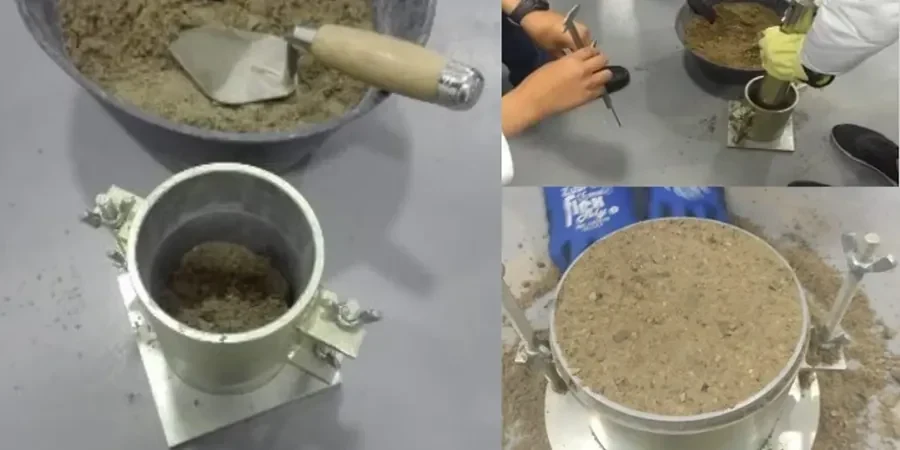
In-situ testing forms the backbone of geotechnical site characterization in Kelowna, encompassing all field-based methods that evaluate soil, rock, and groundwater conditions directly in their natural state. Unlike laboratory tests that rely on disturbed or undisturbed samples transported off-site, in-situ techniques measure properties such as density, strength, permeability, and deformation without removing material from its original environment. This approach is particularly critical in the Okanagan Valley, where complex glacial and post-glacial deposits demand accurate, real-time data to inform foundation design, slope stability analysis, and infrastructure planning. For engineers and contractors operating in Kelowna, in-situ testing provides the reliable ground truth needed to mitigate risks and optimize construction costs.
Kelowna's geology is dominated by thick sequences of glacial till, glaciofluvial sands and gravels, and glaciolacustrine silts and clays deposited during the Fraser Glaciation and subsequent deglaciation. These materials often exhibit significant spatial variability, with lenses of loose, saturated sand adjacent to dense till or soft clay layers. The city's benchlands and valley slopes introduce additional challenges, including colluvial deposits and bedrock at variable depths. In-situ methods such as the field density test (sand cone method) are essential for verifying compaction in these heterogeneous soils, while cone penetration testing and pressuremeter tests help delineate stratigraphy and assess bearing capacity. Understanding these local conditions through field testing is non-negotiable for any development, from single-family homes in the Upper Mission to commercial towers downtown.
Canadian geotechnical practice is governed by national standards, primarily through the Canadian Foundation Engineering Manual and CSA standards adopted or referenced by Engineers and Geoscientists British Columbia (EGBC). In-situ work in Kelowna must comply with ASTM International procedures, such as ASTM D1556 for the sand cone density test, alongside provincial regulations like the BC Building Code and local municipal bylaws. EGBC's professional practice guidelines require that all field testing be supervised by qualified geotechnical engineers or geoscientists who can interpret results within the context of the Okanagan's unique Quaternary geology. Adherence to these standards ensures defensible data for regulatory submissions and safe, serviceable designs.
The range of projects requiring in-situ testing in Kelowna is as diverse as the city's growing landscape. Residential subdivisions on sloping terrain demand shear strength testing to assess landslide risks, while high-rise developments near Okanagan Lake need in-situ permeability tests to manage groundwater during deep excavations. Infrastructure projects, including Highway 97 upgrades, airport expansions, and new utility corridors, rely on field density testing for quality assurance during earthworks. Even smaller-scale applications, such as retaining walls, swimming pools, and septic fields, benefit from targeted in-situ assessments to confirm soil properties. In every case, field testing bridges the gap between desktop studies and real-world performance, providing the site-specific data that laboratory work alone cannot deliver.
In-situ testing measures soil properties in place without removing samples, preserving natural stress conditions, moisture content, and fabric. Laboratory tests require extracted samples that may be disturbed during transport and preparation. Field methods like the sand cone density test provide direct, immediate results that reflect actual site conditions, while lab tests allow controlled, repeatable analysis of specific parameters under defined conditions.
The City of Kelowna typically requires in-situ testing when site conditions suggest variable or problematic soils, for projects on slopes exceeding 15%, or where the BC Building Code mandates geotechnical assessment. Field verification of compaction, bearing capacity, or slope stability may be triggered during subdivision approval, development permit, or building permit stages, especially in areas mapped as geologically sensitive.
Kelowna's glacial deposits—ranging from dense till to loose, saturated sands and soft silts—demand adaptable testing strategies. For granular soils, cone penetration testing or standard penetration tests provide continuous profiles. Cohesive silts and clays may require vane shear or pressuremeter tests. Compaction control in engineered fills often relies on the sand cone method. The variable stratigraphy means multiple test types are frequently combined to fully characterize a site.
In British Columbia, in-situ testing must be carried out or supervised by a professional engineer or geoscientist registered with EGBC. Field technicians may execute routine procedures under direct supervision, but interpretation and reporting require a qualified professional who understands the test limitations, local geology, and applicable ASTM or CSA standards. This ensures results meet regulatory and professional practice requirements.
We serve projects across Kelowna and surrounding areas. More info.